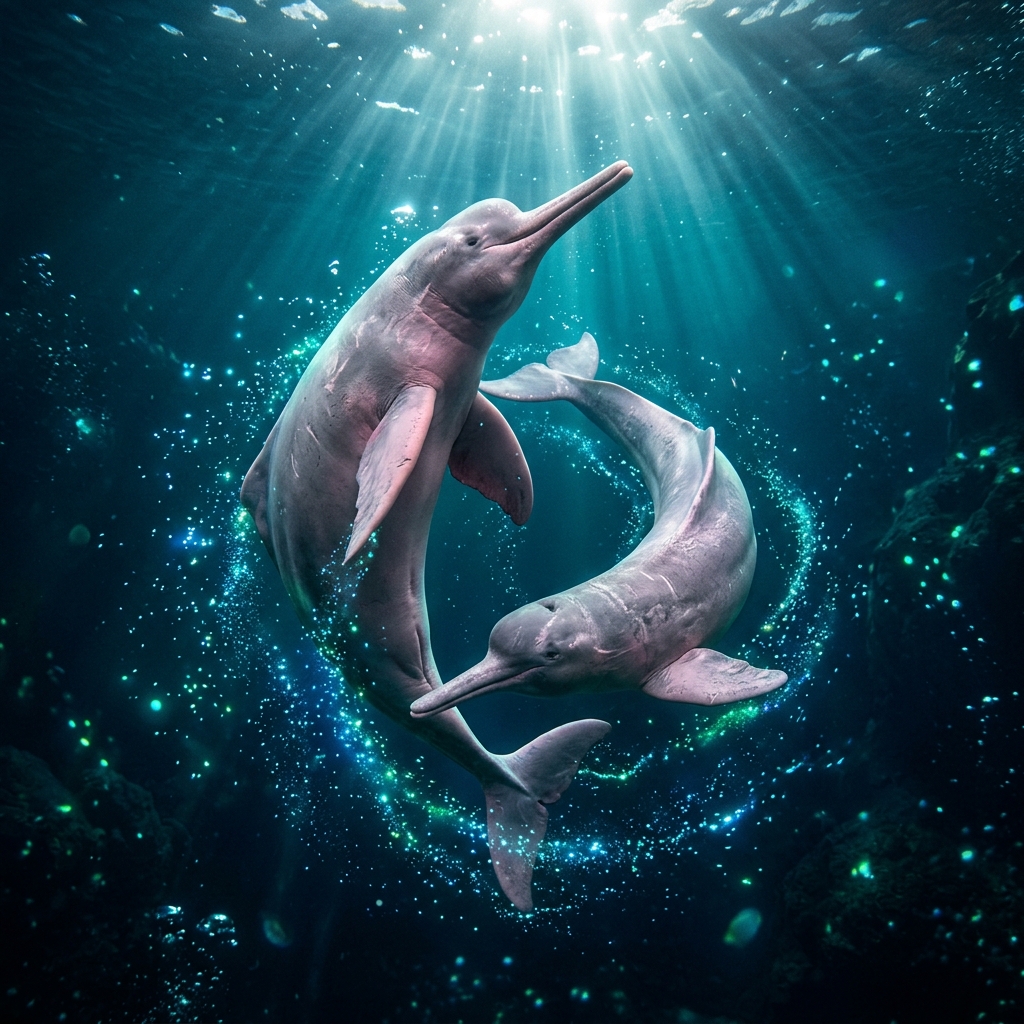
Courtship
& Mating
Males perform breathtaking acrobatic leaps, produce complex whistles, and compete fiercely to win a mate. Some species form temporary alliances — a rare form of social strategy seen in very few animals on Earth.
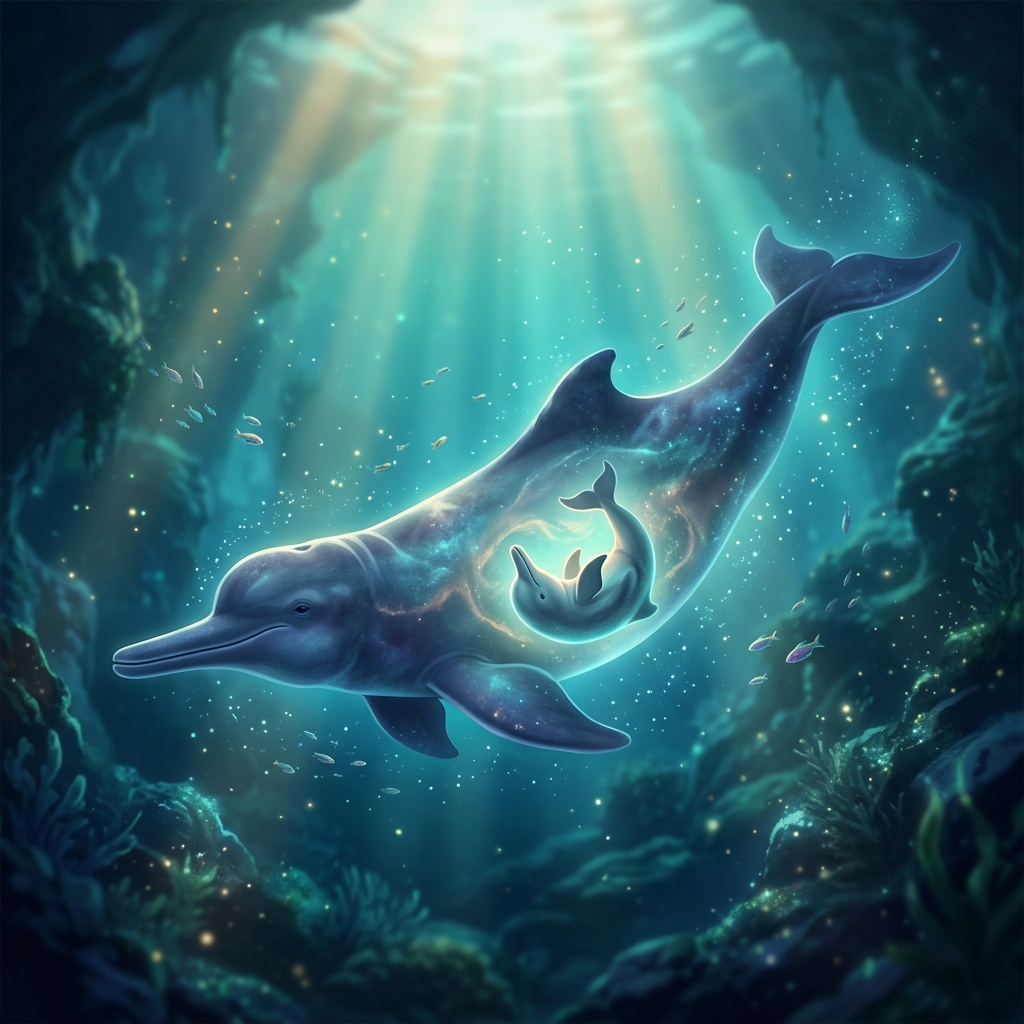
Pregnancy
& Gestation
Inside the womb, the calf develops its iconic fins, melon organ, and remarkably large brain. The mother's body adapts profoundly — she eats more, swims differently, and the pod watches over her with special care.

Birth
Into the World
Born tail-first underwater to prevent drowning, the calf is immediately guided to the surface by its mother and other female pod members. Within minutes of birth, it takes its very first breath.
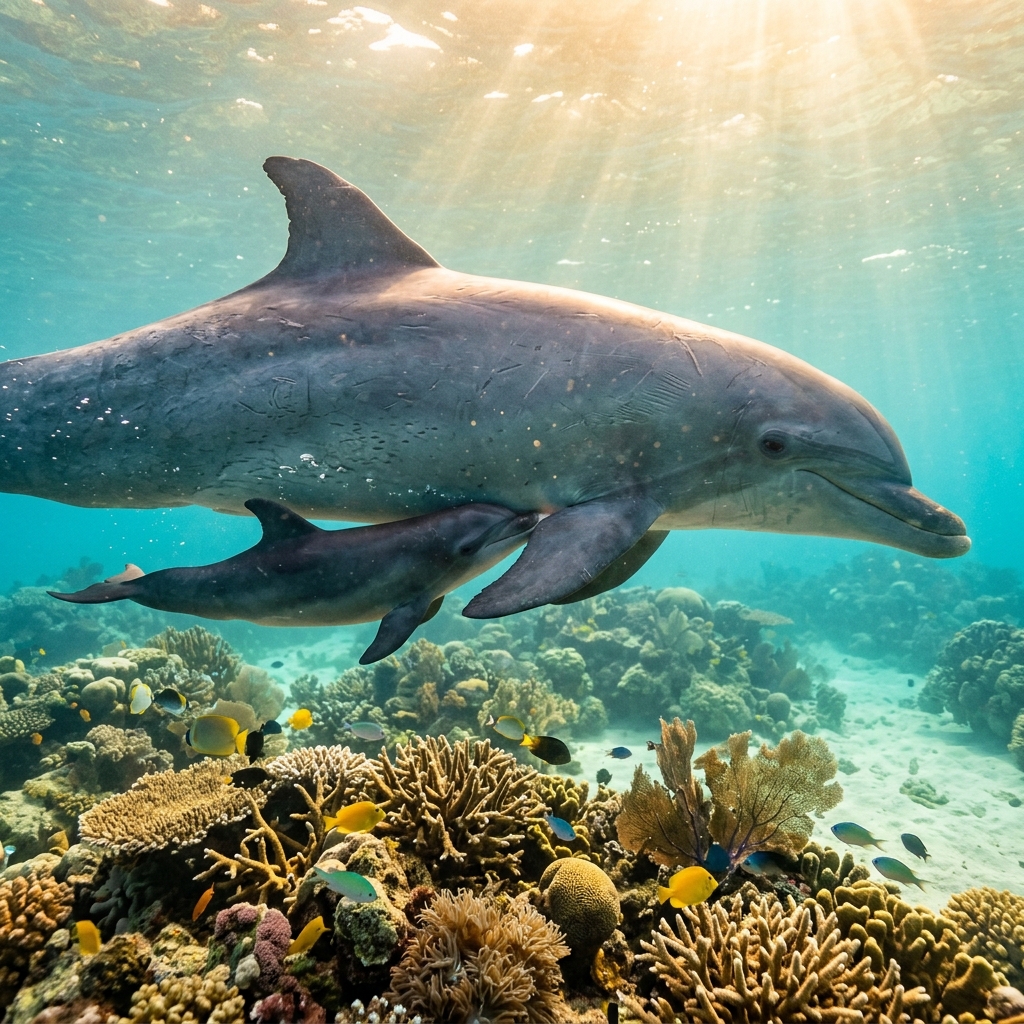
Newborn
First Breaths
The calf drinks extraordinarily rich milk — up to 10x fattier than human milk — and grows at an astonishing rate. It swims in its mother's slipstream, a technique called "echelon swimming" that halves its energy use.

Calf
Development
The calf begins to explore — making short solo trips, practicing jumps, and developing its own unique signature whistle. This whistle works like a name; other dolphins will call back to it for the rest of its life.
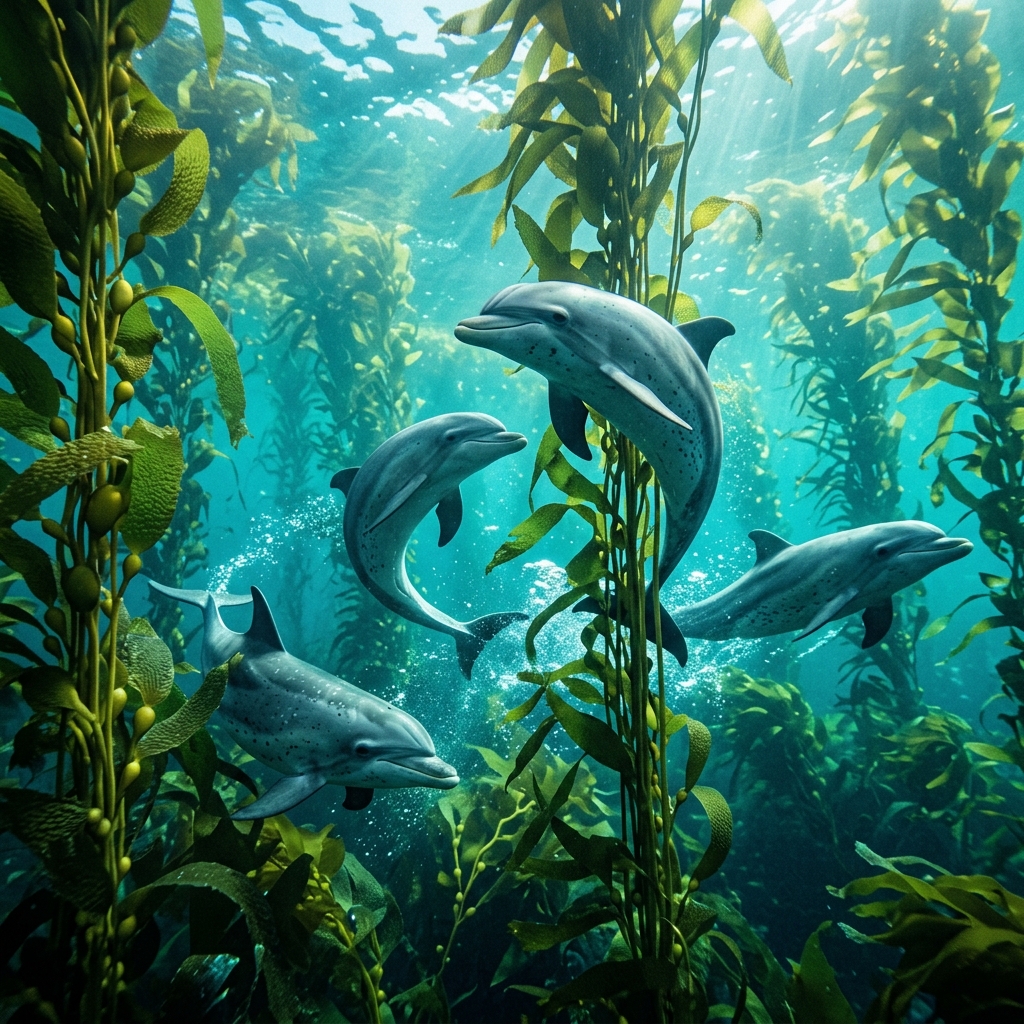
Juvenile
The Playful Years
Juvenile dolphins spend their days in energetic play with peers — but this isn't idle fun. Every game builds the neural pathways for teamwork, problem-solving, and communication that adult survival demands.
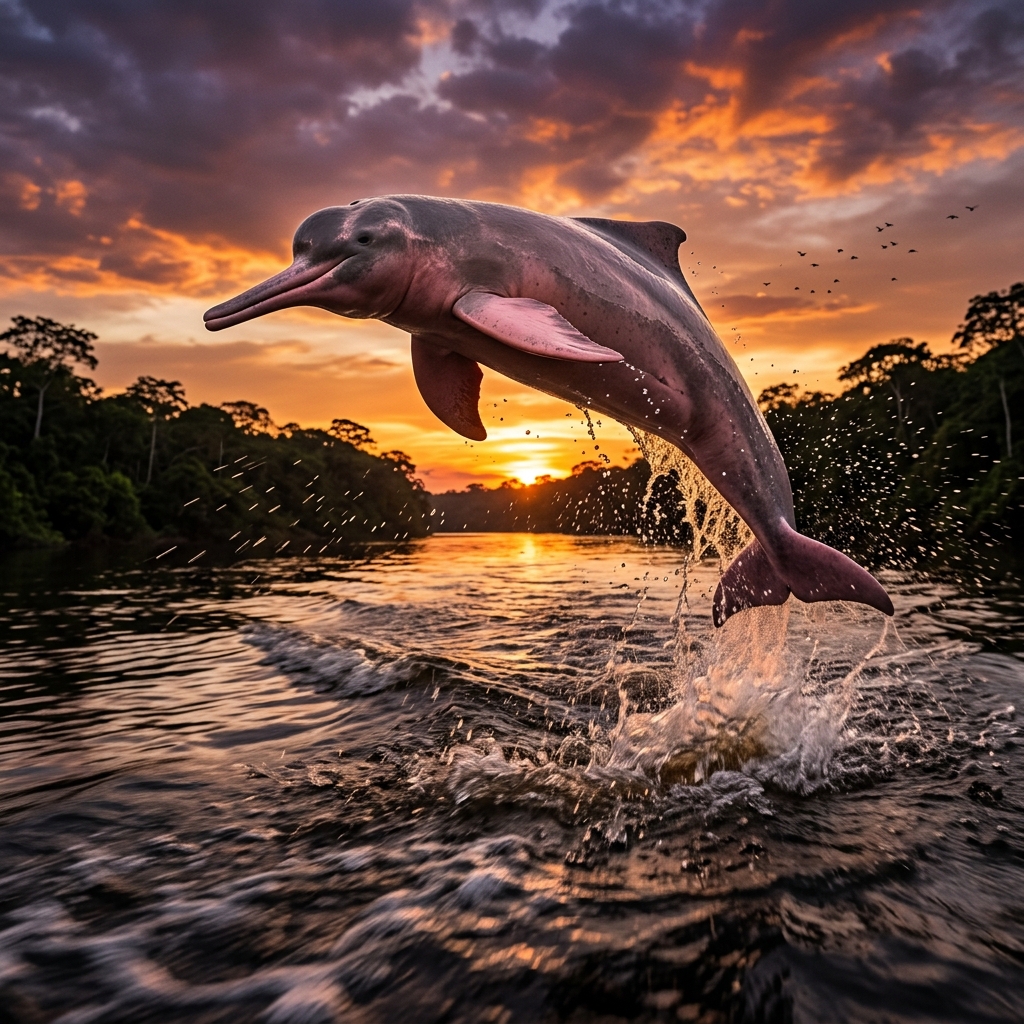
Sexual
Maturity
At peak physical power, a dolphin can sprint at 60 km/h, leap 5 meters into the air, and dive to depths of 300 meters. Males begin competing for breeding rights; females become selectively choosy about their mates.
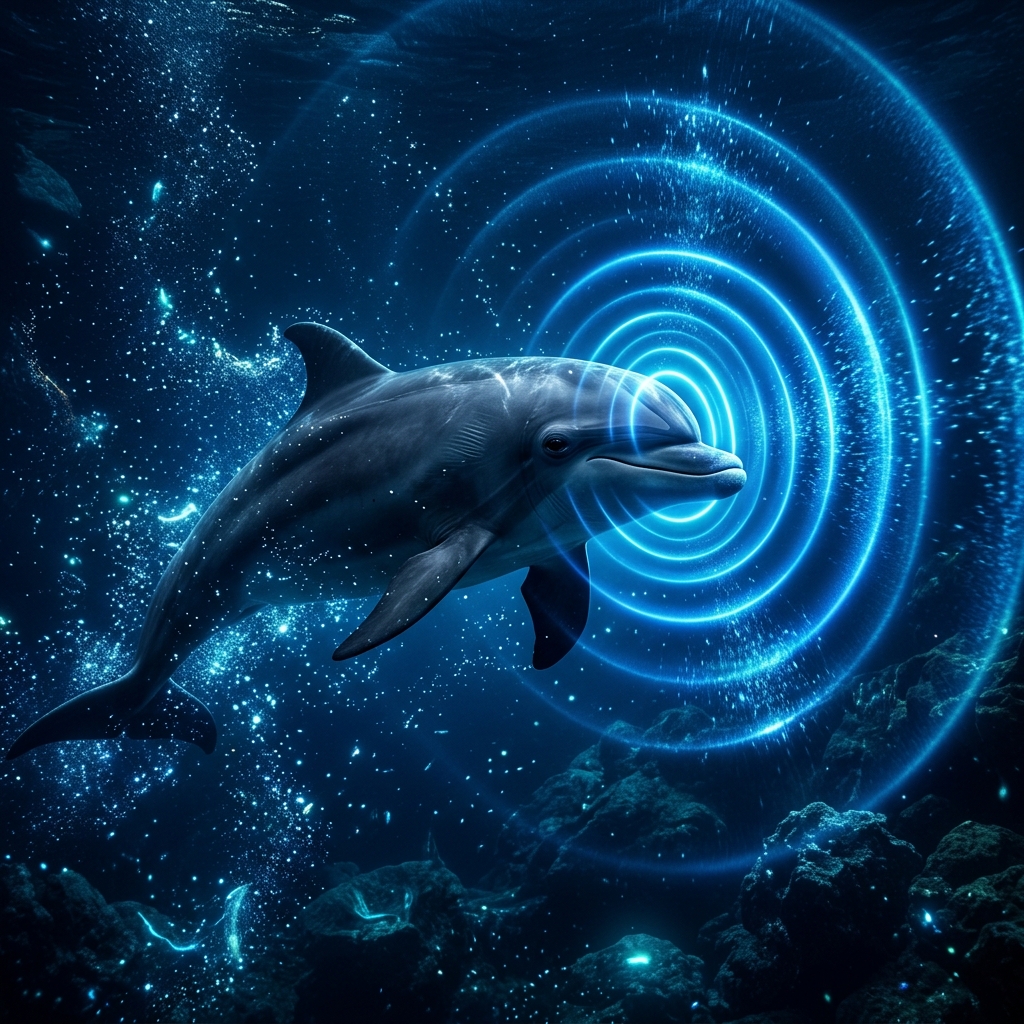
Adult
Echolocation
Adult dolphins wield one of nature's most sophisticated sensory systems. Their biosonar is so precise they can detect objects the size of a golf ball from 75 meters away — in total darkness, through murky river water.

Parenting
& Legacy
Dolphin mothers invest more time raising a single calf than almost any other animal besides humans. Grandmothers, aunts, and older sisters all help — a multi-generational family strategy that dramatically improves calf survival.

Elder
Wisdom
Elder dolphins are invaluable. Orca grandmothers have been found to guide their pods to food during famines, drawing on decades of memory. When an elder dolphin dies, irreplaceable knowledge vanishes with them.
Return
to the River
In death, the dolphin's body feeds hundreds of species in the deep — a final gift to the river. But today, dolphins face premature death from fishing nets, noise pollution, and habitat loss. The cycle we must protect.
Saving the Xihu × Dolphin Science
The Journey
of Life
11 stages. One remarkable life. Scroll to witness the complete dolphin life cycle.